How does the University Senate make policy?
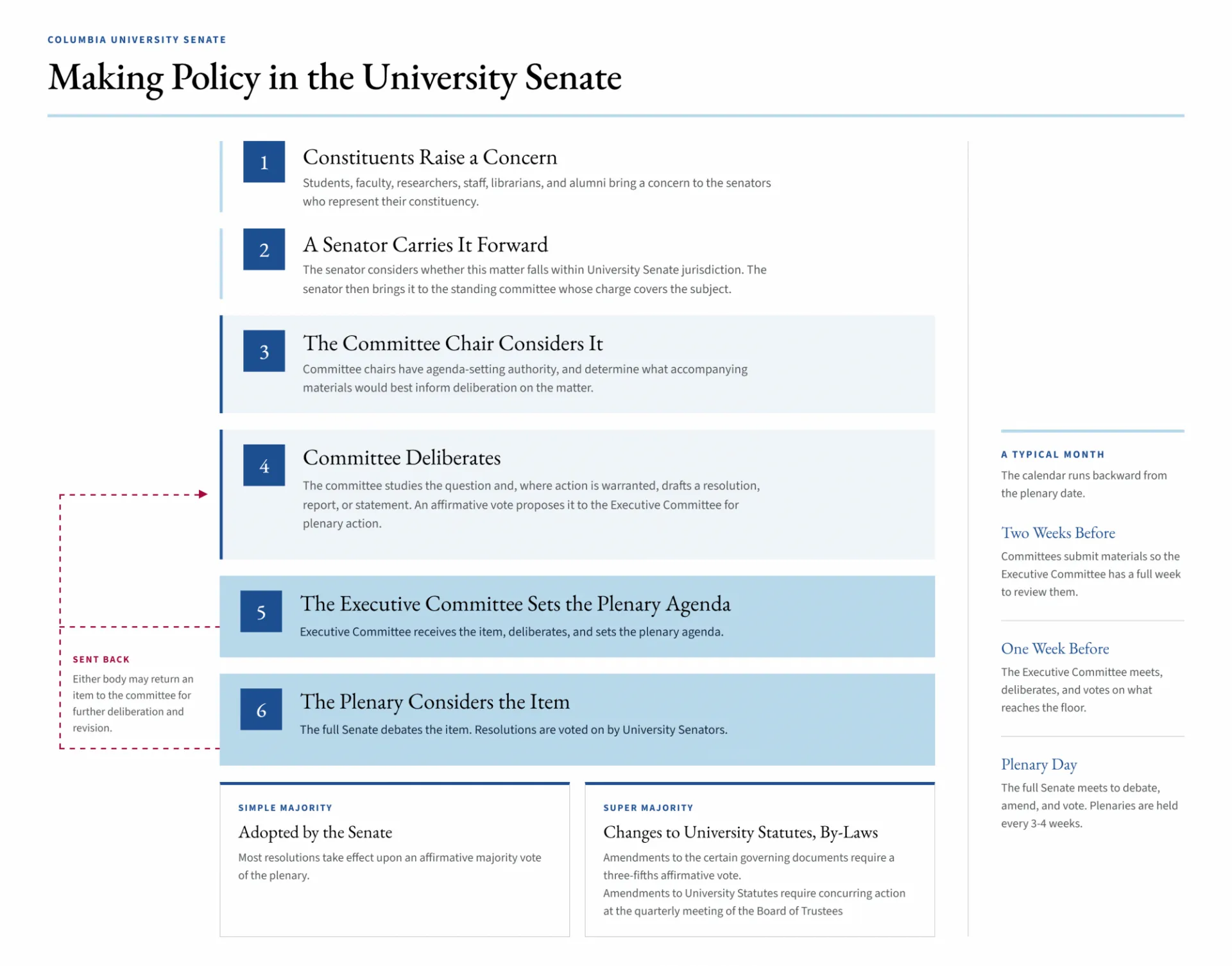
All members of the Columbia community can bring concerns to the University Senate by contacting the representatives from their school and delegation. Here is how concerns transform into discussions and policy in plenary meetings, which are open to all current CUID holders.
Legislative Calendar 2026-27
The deliberative structure of the University Senate requires materials to be submitted weeks before they are presented in plenary meetings. See the legislative calendar for 2026-27 below.
Roles and Responsibilities of Senator and Nonsenator Members
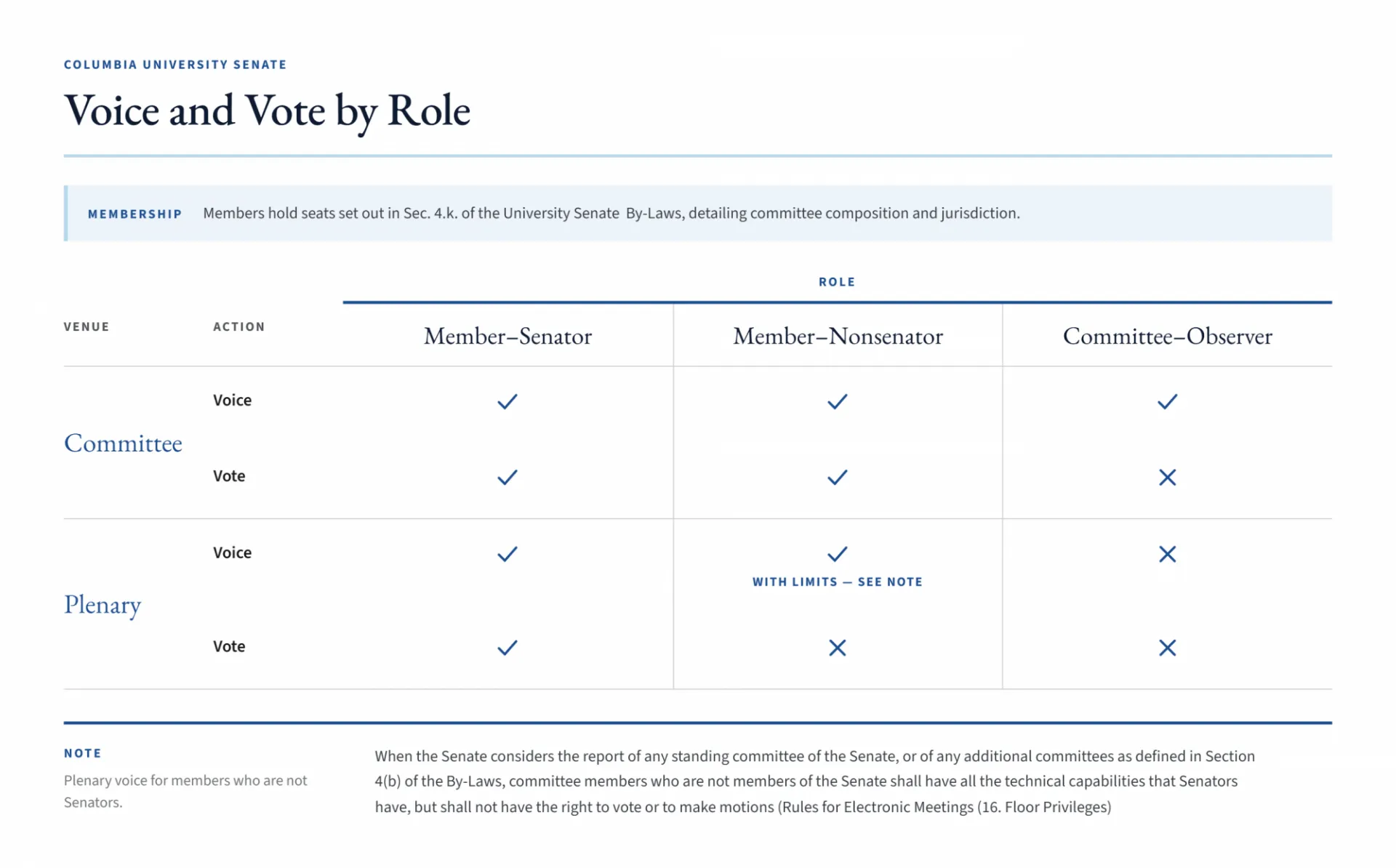
Many committees have both Senator and Nonsenator members. Nonsenator members are crucial to broaden participation, strengthen committees with specialized expertise, and support committee staffing.
New Senator Orientation Materials
New and returning members of the University Senate are invited to an annual orientation with the Senate Parliamentarian. That presentation is now linked here.